






In this article
Yes. Curaçao is a safe destination for tourists and, according to the Netherlands, the United States and Canada, has the lowest travel advisory level: code green, level 1 of 4 and “normal precautions”. Violence against tourists is rare. The most common problem is theft from parked cars at beaches and viewpoints. The biggest health risk is not crime but the sun.
Emergency numbers: police 911, ambulance 912, coast guard 913. The main hospital is Curaçao Medical Center in Willemstad. Tap water is safe to drink.
Below you will find what to watch for and what to do, topic by topic. Travel advisories checked on September 27, 2026.
Curaçao travel advisory by country
| Where do you live? | Advisory | What it means |
|---|---|---|
| Netherlands | Code green (since June 17, 2026) | Lowest of four colors: no particular security risks |
| United States | Level 1: Exercise normal precautions (September 9, 2026) | Lowest of four levels |
| Canada | Take normal security precautions | Lowest of four levels |
Swipe the table sideways to see all columns.
All three mention petty crime, such as theft of unattended belongings and break-ins into cars and vacation homes, as the main point of attention. During carnival (January through March) this happens more often. The Dutch travel advice also warns that drug possession, including soft drugs, is severely punished.
What should you watch out for? All risks at a glance
| Topic | How big is the risk? | What to do |
|---|---|---|
| Belongings in the car | Most common problem | Leave nothing visible, not even for a moment |
| Sun and heat | High, and often underestimated | Sunscreen, water, shade between 11 am and 3 pm |
| Sea and currents | High on the north coast, low on the southwest coast | Swim at the bays on the southwest side |
| Traffic | Moderate: speed bumps, animals, unlit roads | Drive slowly, use the main roads after dark |
| Pickpockets | Low, mainly in Punda on busy cruise days | Bag in front, phone in your pocket |
| Mosquitoes | Low to moderate, dengue occurs | Repellent with DEET, also during the day |
| Violence | Rare against tourists | In the evening, stay in the well-known areas |
Swipe the table sideways to see all columns.
Free travel planner
Going to Curaçao? Get the planner in your inbox
- What to book ahead and what you can do on the spot
- Weather and crowds in your travel month
- A reminder 5 weeks before you go and your checklist 10 days before
Willemstad: by day and at night
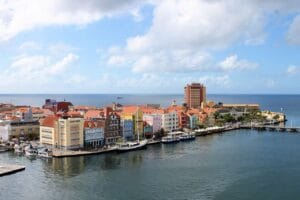
Punda, Otrobanda and Pietermaai are fine to visit during the day. In the evening Pietermaai is the nightlife area, well lit and lively. The tourist police (Politur) patrol the tourist areas. What you’d better not do: wander aimlessly through unfamiliar residential areas at night with an expensive camera around your neck. That applies in every port city.
When cruise ships are in port, Punda gets extra busy and pickpockets are more active. Keep your bag in front of you and your phone in your pocket. Want to see the city with someone who knows the way? The Willemstad City Walk (from € 31 per person) or the Discover Willemstad Tour (from € 53) is an easy start. More tips in our Willemstad walking route.
Your belongings and your rental car
Theft from parked cars is the problem tourists face most often, especially at remote bays and lookout points. Never leave anything visible, not even for ten minutes, and pack your beach things at your accommodation. If you put things in the trunk at the bay and walk away, you’re sometimes being watched.
Only take what you need to the beach: phone, some cash and your key. Passport, laptop and jewelry stay in the safe. Park where other people park and always lock the car.
Traffic and driving
You drive on the right and the main roads are good. What stands out: lots of speed bumps, even on main roads, unlit roads outside the city and goats, dogs and sometimes donkeys on the road, especially early in the morning and late in the day. A Dutch license is valid. If you drive with another license, ask your rental company what you need.
After a heavy shower, low-lying roads can be flooded; turn around if so. In the evening, stick to the main roads rather than the shortest route through the interior. Rather not drive yourself? Read our guide on Curaçao without a rental car.
How safe is the sea?
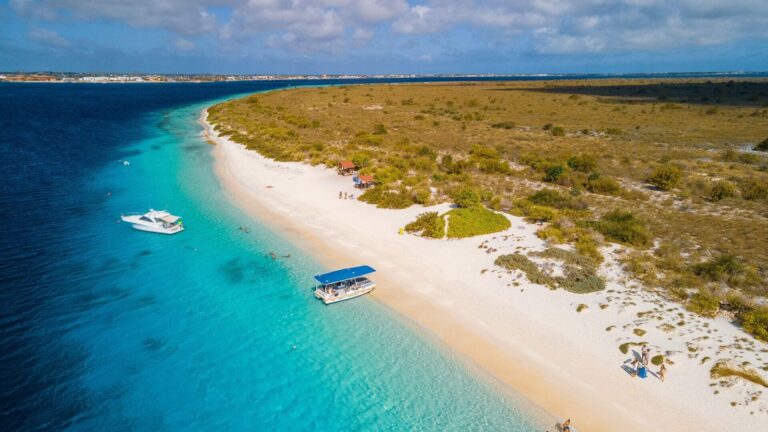
On the southwest side, where almost all the well-known bays are, the sea is usually calm. The northeast coast is a different story: high waves and strong currents, and swimming there is not recommended. At Shete Boka the surf is spectacular to watch, but stay on the paths and away from the edge.
Most small accidents happen on a rocky entry with waves, not in deep water. Wear water shoes, never swim alone at remote spots and watch for boat traffic when snorkeling. Not sure? Go with a guide: on the Tugboat Snorkel Tour (from € 89 per person) or a day trip to Klein Curaçao (from € 125) the crew picks the snorkel spot based on the conditions of the day. More options in our guide to the best snorkel tours.


Sun, heat and mosquitoes
Curaçao lies close to the equator: the sun is much stronger than in North America or Europe, and on the water you burn without noticing because the wind cools you down. Reapply sunscreen every two hours, drink 1.5 to 2 liters (50 to 70 oz) of water on an active day and find shade between 11 am and 3 pm. Children, older travelers and people on medication are more sensitive.
Dengue, a virus spread by mosquitoes, occurs on Curaçao. The mosquito that carries it bites mainly during the day. Use repellent with DEET and, if in doubt, ask a travel clinic or your doctor for advice before you leave.
Medical care and insurance
| What | Details |
|---|---|
| Hospital | Curaçao Medical Center (CMC), Otrobanda, Willemstad, with emergency room |
| Ambulance service | 912 |
| After-hours doctor | +599 9 462 9252 |
| Tap water | Safe to drink (desalinated seawater) |
| Pharmacies | Spread across the island; bring regular medication in your carry-on with a copy of your prescription |
Swipe the table sideways to see all columns.
For your health insurance, Curaçao counts as abroad. Get travel insurance that covers medical costs and, if needed, transport home. That also applies to travelers from the US and Canada: domestic health insurance often covers costs abroad only partly or not at all.
Money and ATMs
Card payments work almost everywhere. At beach bars, food trucks and the entrance of some beaches, cash is easier; US dollars are accepted almost everywhere. Use an ATM at a bank or inside a store rather than a stand-alone machine in a quiet spot, and keep your cards in two different places. More about currency, exchange rates and tipping in our guide to paying, currency and tipping in Curaçao.
With kids, solo or as an older traveler
| Who | What to watch for |
|---|---|
| Families | Calm water on the southwest side; more water and shade than kids ask for; agree on a fixed meeting point at the beach |
| Solo travelers | Very doable; tell someone where you are going when visiting remote bays or hikes and do not snorkel alone |
| Older or less mobile travelers | Heat and rocky entries are the main issue; choose beaches with a sandy entry and plan rest around midday |
Swipe the table sideways to see all columns.
More tips in our guides to Curaçao with children and Curaçao for older and less mobile travelers.
What to arrange before you go
- A valid passport and the online immigration card (required before arrival). See our guide to travel documents and entry requirements.
- Travel insurance that covers medical costs.
- A credit card for the deposit on your rental car.
- The emergency numbers 911 and 912 and the address of your accommodation in your phone and on paper.
- An eSIM or local SIM card: check your roaming rates before you go. See internet, SIM card and eSIM.
Frequently asked questions about safety in Curaçao
Is Curaçao safe for tourists?
Yes. The Netherlands, the United States and Canada all give Curaçao their lowest travel advisory. Violence against tourists is rare; the most common problem is theft from parked cars.
What is the travel advisory for Curaçao?
Netherlands: code green. United States: level 1 of 4, “exercise normal precautions”. Canada: “take normal security precautions”. Checked on 27 September 2026.
What are the emergency numbers in Curaçao?
Police and fire 911, ambulance 912, coast guard 913.
Can you walk safely through Willemstad at night?
In Punda, Otrobanda and Pietermaai, yes. Avoid unfamiliar residential areas at night and don’t walk around with expensive items visible.
Is it safe to drive in Curaçao?
Yes. Watch out for the many speed bumps, unlit roads outside the city and animals on the road. After heavy rain, low-lying roads can flood.
Can you swim safely everywhere?
On the southwest side, usually yes. On the northeast coast the waves are high and the currents strong; swimming there is not recommended.
Can you drink the tap water in Curaçao?
Yes. Tap water is desalinated seawater and of good quality.
Do you need travel insurance for Curaçao?
It is strongly recommended. Curaçao counts as abroad for your health insurance, and a hospital stay or transport home is expensive. Check beforehand that medical costs are covered.
Prefer to travel with a guide? Then check out which activities and excursions suit your trip.
 Jetskiing in Curaçao: which jetski tour is right for you?
 Best excursions from the Curaçao cruise port
 Best sunset cruises in Curaçao
 Best buggy and UTV tours in Curaçao