





In this article
What kind of island is Bonaire?
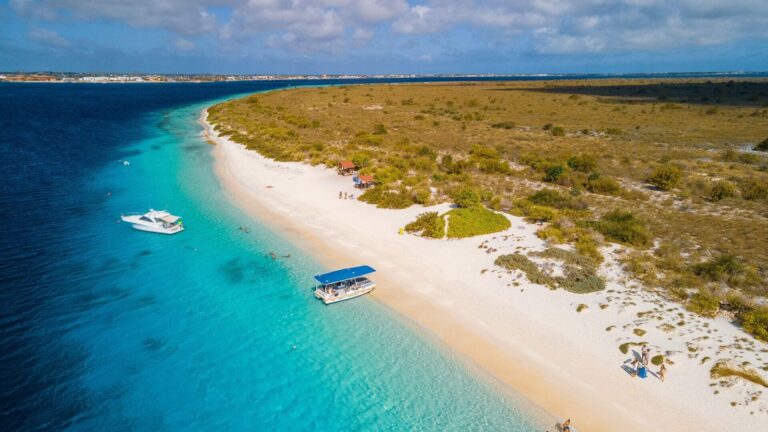
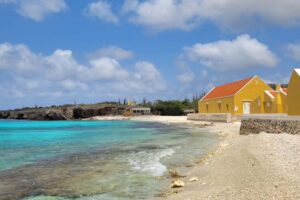
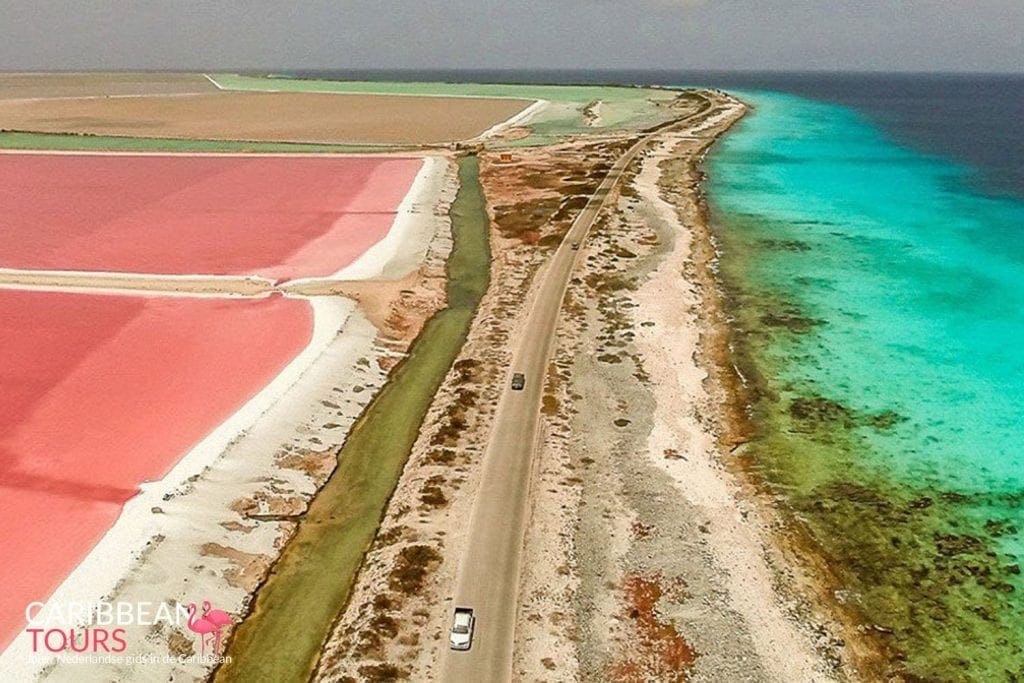
Bonaire is small, dry, and quiet. There are no mountains, no rainforests, and no large resort strips. What it does have: miles of coastline where you can easily walk into the water, a protected reef that starts close to shore, and a landscape of cacti, salt pans, and hills. The island belongs to the Netherlands as a special municipality, making many practical matters feel familiar. Dutch is widely spoken, alongside Papiamento, English, and Spanish.
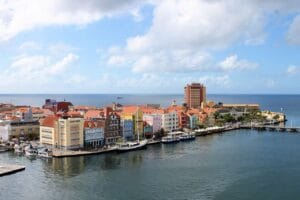
If you're going to Bonaire for the first time, it's especially pleasant if you enjoy peace, nature, and water. If you're looking for nightlife and crowds, the island is less suitable. Kralendijk is the only real town, and you can walk through it in an hour. The rest of the island consists of small residential areas, nature reserves, and coast, with Rincon in the north as the second most significant place.
What's noticeable when you drive around there: there are wild donkeys and goats everywhere along and on the road. They are part of the scenery, but it is a reason to drive slowly, especially at dusk.
| Topic | What to know | What you arrange |
|---|---|---|
| Getting around | No public transport as you know it at home | Rental car or excursions with transportation |
| Payment | The US dollar is the currency | What cash plus a card |
| Water in | Nature Fee is mandatory for snorkeling and diving. | Arrange online in advance |
| Weather | Warm, dry, and almost always windy | Sun protection and light clothing |
| Excursions | Small groups, fills up quickly during holidays | Book popular tours in advance |
Swipe the table sideways to see all columns.
How do you get around the island?
There is no public transport schedule as you are used to in the Netherlands. Those who want to see the island usually rent a car, and most visitors do so for their entire stay. If you mostly stay around Kralendijk and by the beach, you can manage without one. Taxis run on fixed rates, many excursions include transport or a transfer, and the water taxi to Klein Bonaire departs from the center.
The consideration is in our guide about rental car or excursions on Bonaire, and if you want to travel without a car, our guide on Bonaire without a rental car. The distances are small. From Kralendijk, you can drive to the southern tip in about half an hour and to the north in three-quarters of an hour, so you're never on the road for long.
If you are driving yourself, please be aware that some of the roads in the north are unpaved. A regular rental car is sufficient for most routes, but after rain, some sections may be more difficult to navigate.
The Nature Fee: sort this out before you go
Everyone who snorkels, dives, or enters the water within the Marine Park on Bonaire pays a mandatory nature fee. Divers pay a different rate than others. You arrange this online in advance and must be able to show proof, as it is checked at snorkeling spots and dive sites. So, do it before you want to enter the water on your first day.
What the park exactly entails and which rules apply, you can read in our guide about snorkeling in Bonaire Marine Park. The proceeds go towards the management of the park: surveillance, maintenance of the mooring buoys, and research. Therefore, it is not a general tourist tax, but money that directly benefits the reef.
What else you need to arrange before departure is in our guide on travel documents and entry requirements for Bonaire and in our guide on fly to Bonaire.
What do you do in your first few days?
Start slow. The first day is usually about getting used to the heat, doing some shopping, and a first dip in the water close to your accommodation. An island tour early in your trip works well, as you'll then know which places you want to visit again yourself. More about that can be found in our guide about the best island tours on Bonaire.
Also plan Klein Bonaire early. It's the outing that pretty much everyone does and it immediately gives a good impression of the water here. See our guide on the Water taxi to Klein Bonaire. Do your grocery shopping on the day of arrival. Not all supermarkets have a wide selection, and on Sundays, opening hours are more limited, so you don't want to start the weekend with an empty fridge.
On your first evening, take a walk through Kralendijk. It's small, you'll immediately get a feel for the island, and you'll see which restaurants you might want to try later. A route is in our guide about Kralendijk in One Day.
Getting to know the island with a scenic drive
A guided tour takes you on a day trip through the south with the salt pans and slave huts, and the north with Rincon and Lake Goto. Along the way, you'll receive explanations about what you're seeing. For first-time visitors, this is an efficient way to get to know the island. You'll then know where everything is and how far apart things really are.
On a day like that, bring plenty of water. There is no shade at the salt pans and at the viewpoints in the north, and there is not always something for sale along the way.


First time snorkeling
Snorkeling is the activity almost everyone does on Bonaire. The reef often starts close to shore, so you don't need a boat to see a lot. If it's your first time, a guided snorkeling tour is a pleasant start. You'll go to spots you wouldn't easily find on your own, and someone will keep an eye on you. More options are in our guide about the best snorkeling excursions on Bonaire.
Start in a quiet spot near Kralendijk before heading to the more well-known spots along the coastal road. This way, you'll know how your mask fits before you're at a more difficult entry point.


How much does a vacation in Bonaire cost?
Bonaire is not a cheap destination. Many products are imported, making groceries and eating out more expensive than you're used to at home. You'll primarily save on the things the island offers for free: shore snorkeling, beach days, and driving along the coast. That saves more than searching for cheap restaurants.
A complete overview is in our guide on how much a vacation to Bonaire costs. A rental car is a fixed cost that many visitors underestimate. Factor this in from the beginning, along with fuel, because you'll be driving more than you expect.
Eating out is relatively expensive, but cooking for yourself is manageable. Many accommodations have a kitchen, which means eating out can be for a few evenings instead of every day.
Payment, water, and practical matters
On Bonaire, you pay with the US dollar. You can withdraw money at many places, but bring some cash for small purchases, parking, and tips. The tap water is of good quality and drinkable. Bring your own bottle; it saves money and plastic.
Outlets and the power grid don't work the same everywhere as in the Netherlands, so check this with your accommodation if you bring equipment. Save some small change for tips. A tip is customary in restaurants and for tours, and it's harder to arrange with only large bills or a card.
Weather, wind, and what that means
It is warm and dry year-round, with almost constant trade winds. These winds make the temperature pleasant, but they are also deceptive: you burn faster than you think because you feel the sun less. Most rain falls in the autumn, usually in short showers. Rain lasting for days is exceptional.
More about months, crowds, and wind can be found in our guide to the best time to visit Bonaire. The east side of the island is a lot windier than the west side. If you want a quiet beach day, stay on the sheltered west coast or go to Klein Bonaire.
Bonaire lies outside the usual hurricane route. It's never completely out of the question, but the island is rarely hit, making it a fairly safe destination even in the fall.
What to bring
Snorkel gear is the first thing you pack. Your own mask fits better than a borrowed one, and you'll use it almost every day here. Also, water shoes for getting into the snorkel spots, coral-friendly sunscreen, a long-sleeved shirt for in the water, and a hat.
A complete list is in our guide on what to pack for Bonaire. Also take a light raincoat or windbreaker for the evenings and for a brief shower. Many visitors leave that at home and then miss it.
How many days do you need?
A week is a good baseline for most people. You'll have time for Klein Bonaire, a scenic drive, a few snorkeling days, and still have room to do nothing. If you plan to dive or want to see the north of the island well, then ten days to two weeks is more pleasant. The island is small, but the days here go by slowly, and that's exactly the point.
A detailed weekly plan is in our guide on Bonaire in 7 days. If you arrive by cruise ship and only have one day, a completely different itinerary applies. More on this can be found in our guide about Excursions from the Bonaire cruise port.
Mistakes first-time visitors often make
Making too many plans is the most common mistake. Bonaire rewards a leisurely pace, with one activity per day and the rest of the time by or in the water. Don't underestimate the sun. Because it's windy, you won't realize you're burning until late, and this happens fastest in the first few days.
And don't wait too long to book popular excursions. The groups are small and during holiday periods they are fully booked weeks in advance, see our guide about booking excursions on Bonaire. Another classic: planning everything for the last few days. If the weather turns out to be bad or a trip is canceled, you'll have no room to reschedule.
Finally, do not underestimate travel day. You will arrive in the heat after a long flight, so for the first evening, plan nothing more complicated than eating something and going to bed early.
Frequently Asked Questions About Your First Time on Bonaire
Do you need a rental car in Bonaire?
For the entire island, yes, because there is no public transport schedule like in the Netherlands. If you stay around Kralendijk and the beach, you can also get around quite a bit with taxis, transfers, and excursions that include transportation.
What do you pay with in Bonaire?
With the US dollar. You can pay with a debit card in many places, but bring some cash for small purchases and tips.
Do you have to pay the Nature Fee if you only snorkel?
Yes. The nature contribution applies to everyone who enters the water within the Marine Park. Register online in advance and keep your proof of registration handy.
Is Bonaire suitable for a first Caribbean vacation?
Sure, if you like water, nature, and peace and quiet. It's safe, manageable, and many people speak Dutch. If you're primarily looking for nightlife and crowds, the island is less suitable.
Can you drink tap water on Bonaire?
Yes, the tap water is of good quality. Bringing your own bottle saves money and plastic.
How many days do you need for Bonaire?
A week is a good baseline. If you plan to dive or want to explore the north leisurely, then ten days to two weeks would be more enjoyable.
First time in Bonaire? Then check out which activities and excursions suit your trip.
 Excursions with children on Bonaire
 Romantic excursions on Bonaire
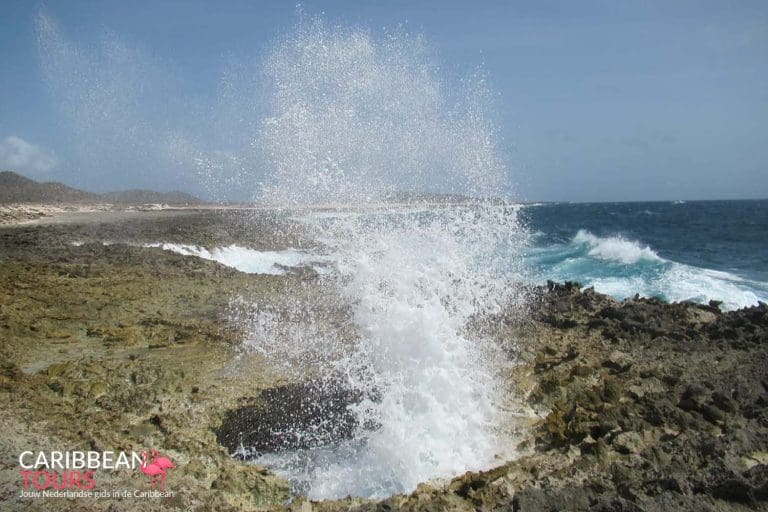 Bonaire for peace seekers and nature lovers
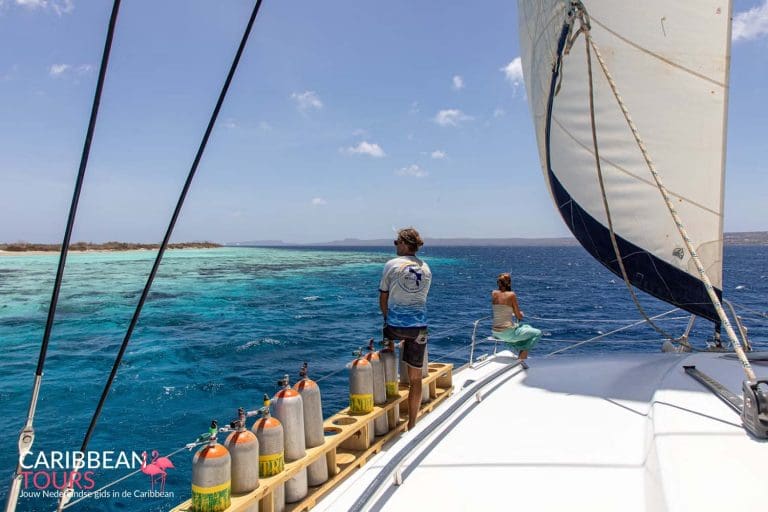 Bonaire for Divers: What to Consider