






In this article
Why an island tour on Bonaire is so rewarding
Bonaire is small, but the two halves of the island are hardly alike. In the south, you'll drive past flat salt pans, pink lakes, and the historic slave houses by the sea. In the north, it becomes greener and more hilly, with Rincon, Goto Lake, and coastal views. An island tour of Bonaire will take you through both in one day. You can also drive yourself, but with a guide, you'll get the story behind it. Why those salt pans are there, what the slave houses signify, and where the flamingos usually hang out: you won't learn that if you just stop by the roadside for a photo.
In this guide, we compare island tours by route, duration, pace, and who they are best suited for. If you're looking for an overview of all activities, check out the best excursions on Bonaire. In practice, it's also an efficient way to organize your week. After one day of driving around, you'll know where the best snorkeling spots are, where to eat well, and which viewpoints are worth visiting. This allows you to plan the rest of your vacation more effectively.
| Type of tour | What you see | Best for |
|---|---|---|
| Classic Island Tour | North and south with guide, fixed route | Anyone who wants to see the whole island at once |
| Private tour | Same highlights, own pace | Families and those who prefer not to be in a group |
| Fatbiketour | Coast and surroundings Kralendijk, active | Who wants to move and stay close |
| Hiking tour | Views and nature on foot | Whoever wants it quiet and close to nature |
| Self-driving | Everything, in your own order | Who likes to plant and stop themselves |
Swipe the table sideways to see all columns.
What do you see in the south?
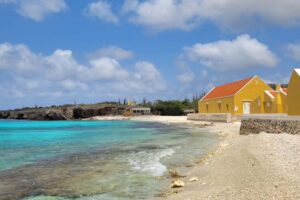
The south is the most photogenic part of the island. You drive past enormous salt pans where the water can turn pink due to algae, with mountains of white salt on one side and the sea on the other. Along that same road are the slave huts: small, low stone cottages where enslaved laborers had to sleep while working in salt production. It's a confronting place and an important piece of the island's history.
Further on, the flamingos are in the shallow inland waters. You might have a chance to see them from the road, but they are wild animals and there are no guarantees. More on this can be found in our guide about Spotting flamingos in Bonaire. Along this coast are also the island's best-known snorkeling spots, often marked with a yellow stone by the roadside. An island tour usually doesn't stop there for a swim, but you'll immediately see where you can go later on your own.
At the southern tip lies Willemstoren, the island's old lighthouse. It's a bare, windy spot where waves crash hard against the rocks, and the contrast with the calm west coast is striking.
What do you see in the north?
The north feels very different. The road winds through hills and along the coast, with viewpoints offering vast ocean vistas. Along the way, you'll pass Rincon, the island's oldest village, with its colorful houses and unhurried pace. The Goto Lake is the best-known stop in this region. Flamingos frequently gather on this shallow saltwater lake, and the view from the road above is one of Bonaire's most beautiful. More about that can be found in our guide to Washington Slagbaai National Park, which begins even further north.
Many island tours only go to the edge of the park and not through it, because the route inside is a full day on its own. If you really want to explore the park, plan that separately. Along the way, you'll regularly encounter wild donkeys and goats by the side of or on the road. They are used to traffic, but it's a reason to drive slowly and not to feed them, however tempting that may be.
Rincon itself is a good stop for a break. The village lies in a valley between hills, which used to offer protection from pirates, and there are a few simple places where you can get a drink.
The classic guided island tour
This is the tour most visitors take. You go out with a small group and drive past the highlights of both the south and the north, with stops along the way to get out and take pictures. The advantage is that you don't have to figure anything out and you get explanations about what you are seeing along the way. For those who have just arrived, this is a good first day, because afterward you will know which places you want to visit again on your own later.
When booking, ask how large the group is and if pickup from your accommodation is included. This varies by provider and determines the total duration of your day.


Private tour: same route, your own pace
If you prefer not to be in a group, a private tour is the logical choice. You'll see the same highlights, but you'll decide together with the guide where to spend more time and what to skip. This is especially convenient with a family, a small group, or if someone has mobility issues. You can make the day shorter or longer and don't have to wait for other participants. More relaxed options can be found in our guide about Bonaire for couples.
A private tour is more expensive per person, but with four or six people, the difference compared to a shared tour significantly decreases. Therefore, for a family, it is often less expensive than it initially appears.


Actively see the island on a fatbike
If you want to be active instead of just riding along, a tour on an electric fat bike is a good alternative. You'll ride along the coast and through the surroundings of Kralendijk, with stops along the way. Because the bike is electric, you'll be less affected by the constant trade winds that are almost always present on Bonaire. You'll see less of the island than on a full tour, but you'll be closer to it. More active ideas can be found in our guide about Bonaire for adventurers.
It's best to do this tour in the morning. Later in the day, the sun is quite intense on the open stretches along the coast, making cycling less pleasant, even with electric assistance.
Island tour or self-driving?
Driving yourself offers freedom and is easy to do on Bonaire, as the roads are straightforward and the distances are short. From Kralendijk, you can drive south in about half an hour and north in three-quarters of an hour. What you miss is the context. The salt pans, the slave huts, and the nature reserves only gain meaning when someone tells the story behind them, and that is precisely what a guide adds.
A common solution is to do both: an island tour at the beginning of your trip and then return on your own to the places you liked best. The trade-off is discussed in our guide on rental car or excursions on Bonaire. If you're driving yourself, keep in mind the dirt roads in the north. A regular rental car usually handles them fine, but after rain, some sections can be more difficult to drive.
What you get with a guide that you rarely find on your own: the small stops. A viewpoint just around a bend, a spot where the flamingos are that week, or a story about a building you would otherwise drive past.
How long does an island tour take?
Allow for half to a full day, depending on the route and number of stops. A tour that covers both the north and south is almost always a full-day program. Departure times are usually in the morning, as it is cooler then and the light is better. Later in the day, it gets very hot at the salt pans and viewpoints.
Take water, sunscreen, and a hat. There aren't many places to buy things along the way, especially in the north. Don't plan anything strenuous for the day after. Driving around in the heat all day seems relaxing, but the sun and frequent stops will take more out of you than you expect, especially in the first few days of your trip.
Who is which tour suitable for?
Are you visiting for the first time and want to get to know the island, then choose the classic tour. You'll get a complete overview in one day and will then know where you want to go yourself. Are you traveling with children or with someone who has less mobility, then a private tour is more comfortable. You can get out whenever it suits you and set your own pace. More on that can be found in our guide about Bonaire with children.
If you're mainly on the island for the water, half a day on land is often enough. Combine that with a snorkeling day, for example, via the best snorkeling excursions on Bonaire. If you've been there before, feel free to skip the classic round trip and choose something specific: a walking tour, a bike ride, or a day in the north. You'll get more out of it than doing the same route again.
If you travel alone, a shared tour is often quite pleasant. You spend the day with the same group, and on Bonaire, where groups are small, this usually becomes cozy on its own.
When do you book an island tour?
The island tours are popular and are conducted in small groups, which means they can be fully booked weeks in advance during holiday periods. So, book this one first if you really want to do it. Preferably, plan it for the first half of your trip. That way, you can benefit from it for the rest of your vacation, as you'll know which places you want to visit again.
More on timing is in our guide about booking excursions on Bonaire. Also, take note of the days when cruise ships are in port. On those days, tours will be fuller and popular stops will be busier than usual.
What to bring
Water, sunscreen, a hat, and sunglasses are most important. There is no shade at the salt pans, and the light reflects extra brightly off the white salt. Wear shoes you can walk in. At some stops, you will walk over unpaved ground or stones, which is less comfortable in flip-flops.
Bring cash for when you're on the go. A complete list is in our guide on what to pack for Bonaire. Binoculars are a nice addition if you're hoping to see flamingos. They are often found at a distance in the shallow water, and with binoculars, you'll see considerably more than with the naked eye.
Also consider lightweight long pants or a thin long-sleeved shirt. That sounds contradictory at these temperatures, but in the open plains, it offers better sun protection than reapplying sunscreen.
Best time for an island tour
Bonaire is warm and dry year-round, so an island tour is always possible. The most rain falls in the fall, usually in short showers that rarely get in the way of your route. Mornings are the most pleasant to be out and about. In the afternoon, the sun is really strong on the open plains in the south.
More about months, weather, and crowds is in our guide about the best time to visit Bonaire. After a rainy period, the landscape in the north is noticeably greener. Those who want to see the island at its greenest should therefore plan their tour towards the end of the rainy season rather than in the middle of the dry months.
When choosing your day, also take the wind into account. Bonaire has almost constant trade winds, and it's precisely that wind that makes a day in the open sun much more pleasant than the temperature might suggest. On an exceptionally calm day, the same route will feel warmer.
Frequently asked questions about island tours on Bonaire
How long does an island tour on Bonaire take?
Half to a full day, depending on the route. A tour that covers both the north and south is almost always a full day.
What do you see during an island tour of Bonaire?
In the south, the salt pans, the pink lakes, and the slave huts. In the north, Rincon, the Goto Lake, and viewpoints along the coast.
Is an island tour better than driving yourself?
Driving yourself gives freedom, a tour gives context. Many visitors do both: first a tour to get to know the island, and then drive back to their favorite spots themselves.
Can you see flamingos on an island tour?
You have a chance of seeing them, both at the salt pans in the south and at Lake Goto in the north. They are wild animals, so it's never certain. Always keep your distance.
Does an island tour go through Washington Slagbaai?
Usually not. The route through the park is a full day's activity on its own. If you want to do the park, plan that as a separate day.
How far in advance do you book an island tour?
Two to four weeks during holiday periods, because the groups are small. Outside of peak season, it's often possible a week in advance.
Want to get to know Bonaire in one day? Then check out which activities and excursions best suit your trip.
 How far in advance should you book excursions in Bonaire?
 Best excursions from the Bonaire cruise port
 Land sailing on Bonaire: experience and practical tips
 Scuba diving in Bonaire for beginners: how do you get started?