






In this article
Why Bonaire feels calm
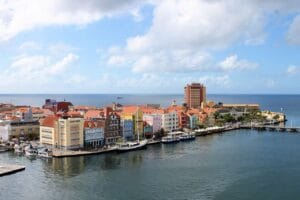
Approximately twenty thousand people live on Bonaire, and tourism is small-scale. There are no high-rise resorts, no busy boulevards, and no rows of a hundred beach chairs. What you mainly hear is wind and sea. Even in the more well-known spots, it's rarely crowded, except for days when a cruise ship is in port.
For those seeking peace and quiet, Bonaire doesn't mean you have to hide away; rather, the island itself imposes a slow pace. The island has consciously made that choice. It hasn't attracted mass tourism, and the reef has been protected since the 1970s, which has kept things on a small scale.
There is also hardly any street lighting outside the town center. That means dark evenings and, on clear nights, a starry sky that you rarely see in the Netherlands.
| Spot | What you find | When it's quietest |
|---|---|---|
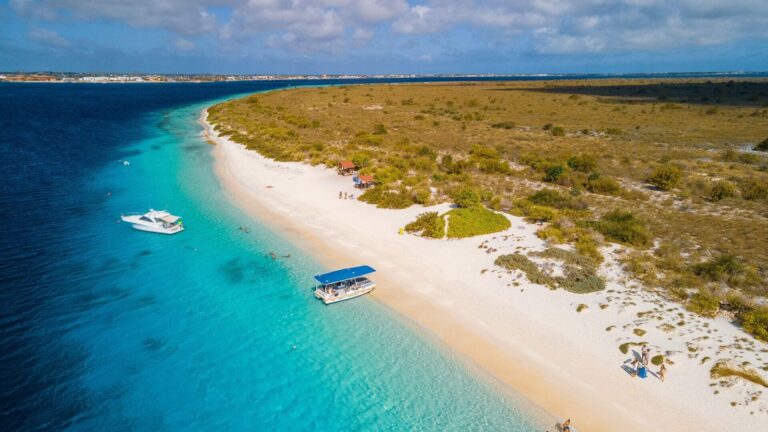
| Klein Bonaire | White beach, no amenities | Early boat, or walk a bit further |
| The north | Hills, viewpoints, Rincon | Early morning |
| Go-to-meet | Birds and a view over the water | Beginning and end of the day |
| Mangroves | Silent tunnels, young fish | Morning tour |
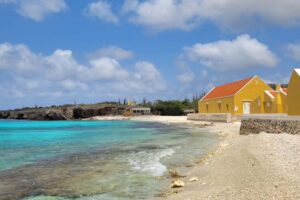
| Snorkeling spots south | Reef near the shore, few people | On weekdays, outside of cruise days |
Swipe the table sideways to see all columns.
Where do you find the most peace?
The further you get from Kralendijk, the quieter it becomes. Along the coastal road to the south, there are snorkeling spots where you are often alone, and in the north, you hardly encounter anyone on the way. On Klein Bonaire, you can walk along the coast for a while from the arrival point. After a few minutes, you'll have entire stretches of beach to yourself.
More about that can be found in our guide to visiting Klein Bonaire. Even on weekdays makes a difference. On weekends, the spots near Kralendijk are popular with locals themselves, and you notice that especially on Sundays.
If you arrive on a day when a cruise ship is docked, just drive half an hour away from Kralendijk. You won't notice it anywhere else on the island. More about this can be found in our guide to the South Bonaire route.
Nature above water
The landscape consists of cacti, thorny bushes, and barren hills, with salt pans and shallow inland waters in between. It is dry and open, which makes the view expansive. Birds are most noticeable here: flamingos in the inland waters, pelicans along the coast, parrots inland, and waders by the pans.
More about flamingos can be found in our guide to Spotting flamingos in Bonaire. Take your time at a viewpoint. If you stand there quietly for ten minutes, you'll usually see more than at first glance: iguanas in the bushes, lizards on the stones, and birds returning.
The salt pans are also a place to pause. The landscape is barren and bright, and the contrast with the green mangroves on the other side of the island is stark. More on that can be found in our guide to the salt pans and slave huts of Bonaire.
The mangroves: the quietest place on the island
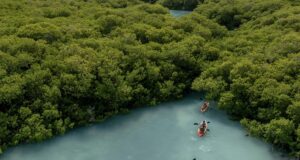
Kayaking through the mangroves of Lac Bay is perhaps the quietest activity on Bonaire. The sound fades away in the narrow tunnels between the roots, and you can see young fish in the shallow water. It's not a strenuous trip, but a trip to be silent. More about that can be found in our guide to kayaking in the mangroves of Bonaire.
Go in the morning. Later in the day, there is more wind on the open water of the bay, and the stillness in the tunnels is less pronounced.


Washington Slagbaai: Nature without the crowds
The national park in the north is large and the number of visitors per day is limited. You drive a route through barren landscapes, past bays where there is often no one. The park has its own opening hours, a last entry time, and vehicle conditions. Check these in advance, as it is a long drive.
More about that can be found in our guide to Washington Slagbaai National Park. Take everything you need: water, food, and a full tank. You can't get anything in the park, and that's precisely why it's so quiet.
Relaxed snorkeling
Snorkeling doesn't have to be an excursion here. Many spots along the coastal road allow you to park, walk into the water, and be back out half an hour later. Choose spots outside the center and go in the morning; the water will be calmest then, and there will be fewer people.
More places can be found in our guide about the best snorkeling spots on Bonaire. Choose a spot without cars in front of it. If there are three dive shop pickups, drive on for a bit, as the next yellow rock is usually within a few minutes.
Take a booklet with you and make a half-day of it: an hour in the water, an hour in the shade, and then repeat. That's the most common daily schedule here.
When is it quietest?
Outside of school holidays, it's noticeably quieter, especially in April, May, June, and September. On days when a cruise ship is in port, Kralendijk and popular spots will be more crowded. Keep this in mind if you're looking for peace and quiet.
More about seasons and crowds can be found in our guide to the best time to visit Bonaire. In the quieter months, prices are often more favorable, and you can book later. This makes spontaneous travel easier.
Where do you stay when you want peace?
Outside Kralendijk, on the coast north or south of the center, it is quieter and you are still close to the water. To the north near Rincon, it is truly rural, but then you need a car and amenities are scarce.
More about that can be found in our guide to Where is the best place to stay on Bonaire. When booking, always ask about the location relative to the road. Accommodation on a coastal road might be livelier during the day than what you see in the photos.
Accommodation with a private jetty offers the most peace and quiet, as you don't even need to get in the car for a dip in the sea.
A day without a plan
The most pleasant days on Bonaire are often the unplanned ones: a late breakfast, an hour of snorkeling, reading in the shade, and watching the sunset at the end of the afternoon. Therefore, plan at most one activity per day. The island is small enough that you won't miss anything.
More about the structure of your week can be found in our guide on Bonaire in 7 days. Pick a permanent spot for sunset and sit there every evening. It sounds simple, but for many visitors, it's exactly what makes a trip here so peaceful.
Leave your phone in your bag for a day. Reception is limited in many places anyway, and that rarely turns out to be a problem.
Respect for nature
Everything that keeps the island peaceful is protected. In the Marine Park, you don't touch anything and pay the mandatory nature contribution when you enter the water. Keep your distance from animals, including the donkeys along the road and the birds near the inland waters. Feeding them or getting too close changes their behavior.
More about that can be found in our guide to snorkeling in Bonaire Marine Park. Always take your trash back with you. There are hardly any bins outside the center, and with the wind, everything blows straight into the sea.
What to bring
Binoculars if you love birds, a good book, and your own snorkel gear. Also, sunscreen, a hat, and plenty of water. Shade is scarce, so a light cloth or umbrella will make a long day outdoors more enjoyable.
A complete list is in our guide on what to pack for Bonaire. Also consider earplugs or a sleep mask if you are a light sleeper. It gets light here early, and the birds start well before sunrise.
Who is this island less suitable for?
If you're looking for nightlife, large beaches with amenities, or something new every day, Bonaire is probably not the right island for you. If you want peace and quiet, this is the place to relax without it becoming boring: there's something to see every day, but nothing you have to do.
Still in doubt, check out our guide on what to do on Bonaire. If you're traveling with teenagers who want a lot of variety, make sure to deliberately plan a few active days. More on that can be found in our guide about Bonaire for adventurers.
Frequently Asked Questions about a Relaxing Vacation on Bonaire
Is Bonaire a quiet island?
Yes. Tourism is small-scale, there are no large resort strips, and outside of Kralendijk you'll encounter few people along the way.
Where can you find the quietest places?
On the coastal road in the south, heading north towards Rincon, in Washington Slagbaai and on Klein Bonaire if you walk along the coast for a while.
When is it quietest on the island?
Outside of school holidays, especially in April, May, June, and September. Also, check the days cruise ships are in port.
Is there a lot of nature to see?
The landscape is dry and open, with cacti, salt flats, and inland waters. Birds are the most striking, from flamingos to pelicans and parrots.
What is the quietest activity?
Kayaking through the mangroves of Lac Bay. In the narrow tunnels, the sound fades away and it's all about observing.
Can you also find peace on Bonaire without a car?
In and around Kralendijk, yes, but the quietest spots are further away. Without a car, you'll have to rely on taxis and tours with transportation.
Discover the island at a leisurely pace? Then check out which activities and excursions suit your trip.
 Excursions with children on Bonaire
 Romantic excursions on Bonaire
 Bonaire for Divers: What to Consider
 Bonaire with a group of friends: the best activities