





In this article
Snorkeling on Aruba: Where should you go?
Aruba isn't a diving destination like Bonaire, but it's excellent for snorkeling. The water on the west coast is calm and clear, and in several spots, you'll be swimming among fish within a few meters. The difference compared to the neighboring islands is that here you less often slide off the shore into a steep reef. On Aruba, you mostly snorkel in shallow bays, around rocks, and at a shipwreck that's accessible by boat.
That's what makes it accessible. Even if you've never snorkeled before, you can comfortably start here in water where you can still stand. In this guide, you'll read about the best places to snorkel in Aruba, what to bring, what rules apply, and when is the best time to go.
| Spot | What do you see | Good to know |
|---|---|---|
| Boca Catalina | Schools of fish near the shore | Small beach, little shade |
| Malmok | Coral and fish reef | Boarding from the rocks |
| Three Traps | Seagrass with a chance of turtles | Small and fast full |
| Mangel Halto | Mangroves and a reef further offshore | Sheltered and calm water |
| Antilla shipwreck | Large shipwreck full of fish | Only reachable by boat |
Swipe the table sideways to see all columns.
Boca Catalina: The Classic
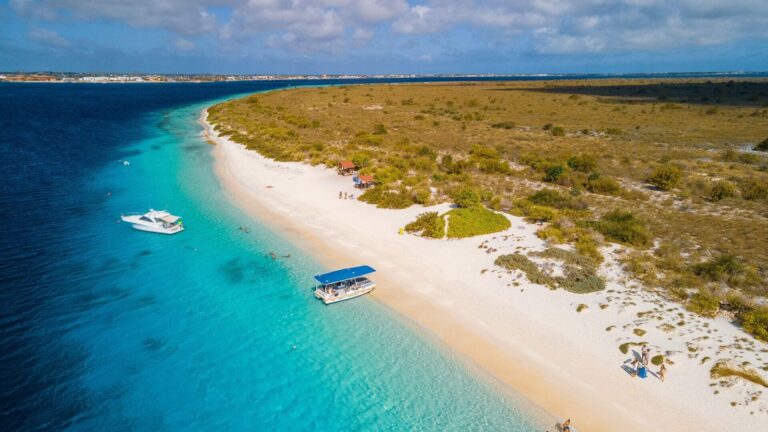
Boca Catalina is a small bay in the northwest with a strip of sand and clear water. You can walk right into the water and see fish almost immediately. It's usually calm with few waves, which keeps visibility good. Around noon, it can get busy with boats docking there.
There are no facilities, so bring water and sunscreen. More on this can be found in our guide on Boca Catalina and Malmok.
Malmok: rocks and coral
At Malmok, there is no sandy beach, but you step into the water from the rocks. Water shoes are not a luxury here. Underwater, there is a bottom of rock and coral with many fish around it. The water is clear because not much sand is stirred up.
Stay away from the boats anchored there and be mindful of the wind, which can be strong here.
Tres Trapi: chance of sea turtles
Tres Trapi is located near Malmok and is known for the sea turtles that feed there among the seagrass. You might encounter them, but they are still wild animals. If you see one, keep your distance, do not touch it, and do not hover over it. It needs to be able to surface to breathe.
The place is small and fills up quickly. Go early. You can read more about it in our guide to Three Traps.
Mangel Halto: protected and varied
On the south side is Mangel Halto, a bay with mangroves where the water starts shallow and later transitions into a reef. Because it is sheltered, the water is almost always calm. This makes it suitable for beginners and children.
The reef is further offshore, so only go there if you are a strong swimmer. More about this can be found in our guide to Mangel Halto.
The Antillean shipwreck
The Antilla is one of the largest shipwrecks in the Caribbean and lies off the northwest coast. Part of it is shallow enough to be seen while snorkeling. Many fish swim around the wreck, and in clear water, you can see the hull beneath you. You get there by boat.
What is included varies by provider. More on this can be found in our guide on the Antilla shipwreck.
Arashi Beach and the pier at Palm Beach
Arashi is a quiet beach in the northwest where you can find rocks with fish close to the shore. It's a pleasant spot for a quick snorkel without having to drive far. At the piers of Palm Beach, many fish often swim around the poles. It's not a spectacular reef, but it's fun for in between.
Watch out for boats and swimmers at the pier, as it's crowded.
Snorkeling from a boat
With a boat trip, you can reach places that are inaccessible from the shore, such as the shipwreck and the reefs further offshore. Most tours stop at two or three spots and last for half a day. Equipment is often included, but check this in advance.
More options are in our guide on the best boat tours in Aruba.


What to bring
Your own mask and snorkel are more comfortable than rented gear. Water shoes are important because the bottom is often rock and coral stone. Also, bring sunscreen, a long-sleeved shirt for in the water, and plenty to drink. Most places have no shade.
The full list is in our guide about What to bring to Aruba.
Snorkeling for beginners
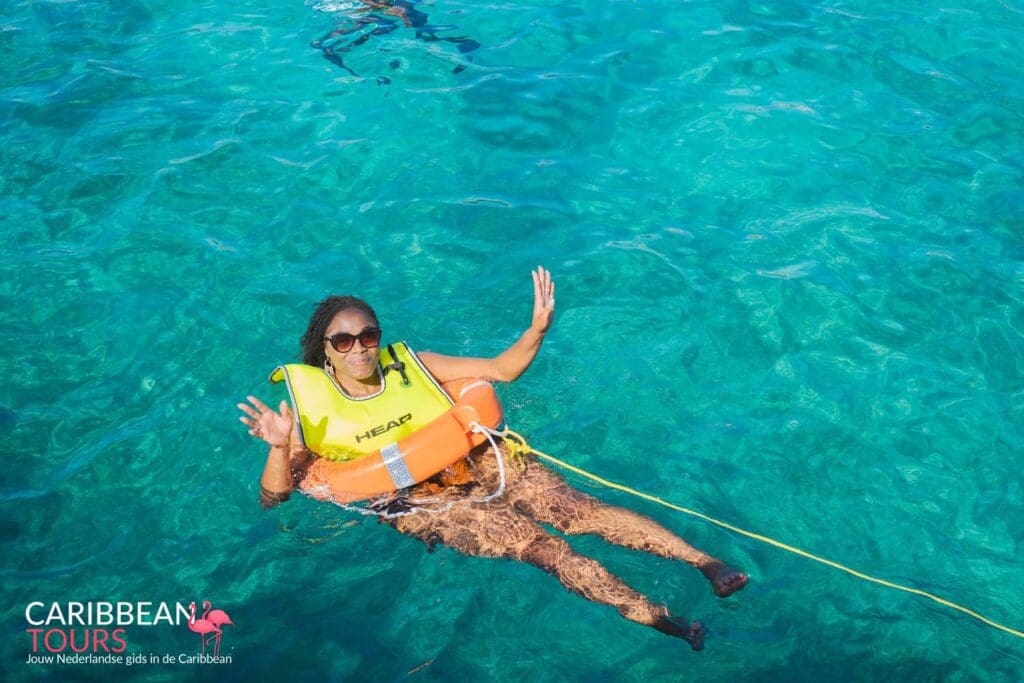
Start in shallow, calm water where you can still stand, for example at Mangel Halto or the shallow part of Boca Catalina. First practice breathing through the snorkel with your face in the water. A life vest or flotation device gives many people peace of mind.
Never go into the water alone and keep an eye on the shore. The wind can push you further offshore than you think.
Snorkeling with kids
Choose spots where the water is shallow and calm, like Baby Beach and Mangel Halto. They can get used to it at their own pace there. Use a well-fitting mask, because a leaking mask will immediately ruin the fun. Life vests are a good idea.
More tips can be found in our guide on Aruba with children.
Rules underwater
Do not touch or stand on coral and animals. Coral grows slowly and is easily damaged. Do not feed fish or chase turtles. Do not take anything from the seabed, not even shells.
Choose sunscreen that is less harmful to water, or cover your skin with clothing. That makes more of a difference than you might think.
When is the water clearest?
The morning is almost always the best time. The wind is still calm then, which means there is less swell and the sand doesn't blow around. Later in the day, the trade wind picks up and the water along the coast becomes rougher. On the sheltered south side, that's less of an issue.
After a heavy shower, visibility can be temporarily reduced due to water flowing off the land.
Snorkeling versus Scuba Diving in Aruba
For snorkelers, the shallow bays and the wreck are the most interesting. Divers go deeper, including at the wreck and at reefs off the coast. If you want to try it out, there are introductory dives available at dive centers on the island. Medical conditions and age limits apply.
Ask the dive center itself, as the conditions vary.
Water Safety
Do not swim on the north and east coasts. There are waves and currents there that can trouble even strong swimmers. On the west coast, be aware of boats. Use a buoy or a brightly colored snorkel vest if you go further from shore.
Read more about it in our guide to whether Aruba is safe.
How to plan a snorkeling day
Start early at Boca Catalina or Malmok when the water is clearest. Then drive on to Arashi for a beach break. Plan the south side for another day, as Mangel Halto is on the other side of the island. Combine that with Baby Beach.
A detailed weekly plan is in our guide on Aruba in 7 days.
Where can you rent equipment?
Palm Beach and Eagle Beach have rental shops and watersports businesses. There is nothing at the smaller bays. If you rent on-site, check that the mask seals properly before paying. A leaky mask will ruin your entire session.
If you go in the water more often, your own set will quickly be more practical.
What do you see underwater on Aruba?
The most common are parrotfish, sergeant majors, blue tangs, and schools of small silver fish that glide in front of you like a cloud. Around the wreck and rocks are larger species. In the seagrass on the south side and at Tres Trapi, you can encounter sea turtles. You will also see starfish and sometimes a stingray that has buried itself in the sand.
Coral is present, but less vibrant than on Bonaire. Aruba is flatter and sandier, giving the underwater landscape a calmer appearance. Take your time and linger in one spot instead of swimming through. You'll see much more than when you create distance.
Snorkeling at sunrise or at the end of the day
In the early morning, the water is calmest and you often see the most activity. Fish are more active then, and the light shines beautifully through the water. In the late afternoon, the light becomes warmer, but there's usually more wind. On the sheltered south side, that's less of a problem.
Do not snorkel in the dark or at dusk. Visibility is poor then, and it is difficult for boats to see you. If you want to know how the days on Aruba go, take a look at our guide about time difference and plugs in Aruba.
Combine with a day at the beach
The snorkeling spots in the northwest are close to Arashi Beach, where you can relax and have a drink after snorkeling. In the south, the easiest way to combine Mangel Halto is with Baby Beach and a stop in San Nicolas. Together, that fills an entire day.
Allow for a half-hour drive between the two sides of the island. Aruba is small, but the southern tip is truly on the other side. More about the beaches can be found in our guide to the most beautiful beaches in Aruba.
How does Aruba relate to Bonaire and Curaçao?
Bonaire is best suited for divers and snorkelers who want to access a steep reef directly from shore. The coral often starts within ten meters. Curaçao is in between, with many bays where you can reach a reef from the beach. Aruba is flatter and sandier, with less coral close to the coast.
On the other hand, Aruba has calmer waters and is easier to access if you haven't snorkeled much. If you're unsure between the islands, check our guide on Aruba or Curacao.
Frequently Asked Questions about Snorkeling in Aruba
Where can you best snorkel on Aruba?
Boca Catalina, Malmok, and Mangel Halto are the best spots from the shore. By boat, the Antilla shipwreck is the most famous stop.
Can you snorkel from the shore in Aruba?
Yes, in various places in the northwest and the south. You get into the water there from a small beach or from the rocks.
Do you see turtles when snorkeling in Aruba?
You might have a chance to see sea turtles, especially near Tres Trapi and in the seagrass. They are wild animals, so it's never guaranteed.
Is snorkeling in Aruba suitable for beginners?
Yes. The water is shallow and calm in many places, so you can get used to it at your own pace.
Should you bring snorkeling gear to Aruba?
Convenient. You can rent at the large beaches, but there's no rental at the most beautiful coves.
When is the water clearest?
In the morning, when the wind is still calm. Later in the day, the water becomes rougher.
Would you also like to see the places you can't reach from the shore? Then check out which activities and excursions fit your trip to Aruba.
 Baby Beach: Shallow Water and Calmness in the South of Aruba
 Mangel Halto: snorkeling among the mangroves on Aruba
 Tres Trapi: snorkeling with a chance of turtles and starfish
 Best snorkeling spots on Aruba