







In this article
Aruba in 7 days: the ideal itinerary
A week is the most popular length of stay for Aruba, and for good reason. The island is small enough to see everything, but has enough variety to fill seven days well without feeling rushed.
This route assumes accommodation on the west coast, near Palm Beach or Eagle Beach, and a rental car for the days you'll be out and about. You won't be driving for more than an hour at a time, so you can return to your own beach every evening.
Each day you read what you are doing, what to pay attention to, and approximately how much time you need. Opening hours and conditions change, so check them beforehand on the relevant page.
| Day | What are you doing | Getting around |
|---|---|---|
| Day 1 | Arrival and quiet acclimatization | Transfer taxi |
| Day 2 | Eagle Beach and Palm Beach | Walk or bus |
| Day 3 | Boat trip with snorkel stops | Excursion |
| Day 4 | North: lighthouse, chapel, rock formations | Rental car |
| Day 5 | Arikok National Park | Rental car or tour |
| Day 6 | South: Baby Beach and San Nicolas | Rental car |
| Day 7 | Oranjestad or public holiday | Bus or walk |
Swipe the table sideways to see all columns.
Day 1: Arrive and Acclimatize
After a nine to ten hour flight, you're tired, and the heat only adds to it. Therefore, don't plan anything big for your first day.
Get groceries for the first few mornings, walk to the beach, and watch the sun set into the sea. That's just enough to land.
Set your watch to Aruba time on the plane, so you don't have to readjust upon arrival. More about the trip is in our guide about flying to Aruba.
Day 2: The beaches of the west coast
Begin at Eagle Beach, the wide white beach with the two crooked divi-divi trees. Early in the morning it is quiet there and the light is at its most beautiful.
During the day, stroll over to Palm Beach, where the hotels, restaurants, and watersports are located. There are often many fish swimming under the piers, so bring your snorkel gear.
Finish with a drink by the sea and the sunset. More about both beaches can be found in our guide to most beautiful beaches in Aruba.
Day 3: On the water
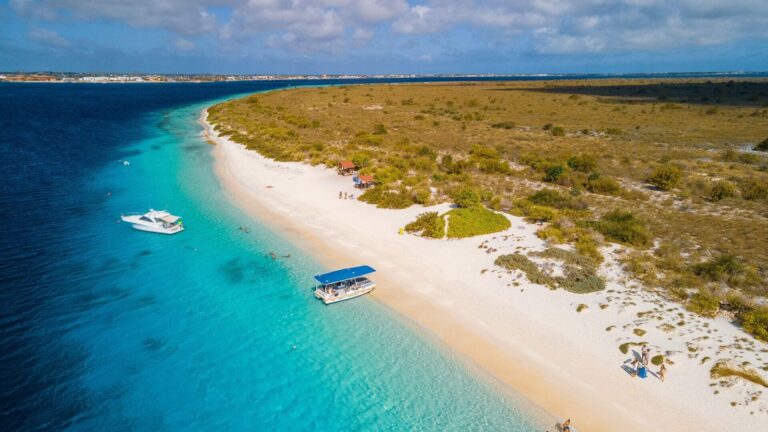
A boat trip along the west coast is the highlight of the week for many visitors. You sail past the hotels heading northwest and stop at the most famous snorkeling spots.
The fixed stop is the Antilla shipwreck, part of which lies so shallow that you can see it well while snorkeling. Many fish swim around the wreck.
Book this in advance during peak season. What is included varies by provider, so check that on the respective page.


Day 4: The North by Car
Pick up your rental car in the morning and drive to the California Lighthouse on the northern tip. From there, you can look over the dunes and the coast on both sides.
Next, visit the Alto Vista Chapel, the small yellow chapel on a hill, and the remains of the Bushiribana gold smelter on the rugged north coast. You can't swim there, but the view is impressive.
Conclude at the Casibari and Ayo rock formations, where you can climb to the top. The entire route is in our guide about the Route through North Aruba.
Day 5: Arikok National Park
Start early, as there is little shade in the park and the temperature rises quickly. Bring at least two liters of water per person and wear sturdy shoes.
You can walk on the marked trails, visit the caves with rock carvings, and walk along the cliffs. With a regular car, you can stay on the designated roads.
If you want to go to the Natural Pool, you'll need a four-wheel drive vehicle, a horse, or a strenuous hike. More on that can be found in our guide to Arikok National Park.
Day 6: The South
Drive to San Nicolas, where entire streets are filled with large murals. It is calmer and less touristy than the north, which makes it interesting.
Next, head to Baby Beach, a sheltered lagoon with shallow water perfect for wading and snorkeling along the edges. Swimming further into the ocean is not recommended.
On the way back, you can stop at Mangel Halto for a snorkeling session among the mangroves. The route is in our guide about South Aruba.
Day 7: Oranjestad or a free day
The capital is small and can be walked through in a morning, with its colorful facades, the harbor, and the shopping streets. The free tram is useful when it's hot.
Tired of sightseeing? Use this day to do something else: go snorkeling again at Boca Catalina or simply spend a day at the beach.
More about the city can be found in our guide to Oranjestad in a Day.
Where are you staying this week?
This route assumes you are on the west coast. Palm Beach is the liveliest with everything within walking distance, Eagle Beach is quieter and more spacious.
If you're in the Noord district behind there, you'll pay less and be at the same beaches within ten minutes. A car is practical then.
More about the areas is in our guide about where to stay in Aruba.
When are you renting the car?
You actually only need the car on days four, five, and six. Renting for three days saves money and parking hassle compared to an entire week.
Reserve in advance during peak season, as rental cars are scarce then. A credit card in the driver's name is usually required for a rental car.
If you're unsure, check our guide on rental car or excursions in Aruba.
This week without a rental car
It's also possible without. The public bus runs along the west coast between Oranjestad and the hotel strip, and for the north and south, you book a tour.
You provide some flexibility, but you still see the main spots. For many visitors, that's a good trade-off.
More about that can be found in our guide to Aruba without a rental car.
Make room in your schedule
Don't plan something big every day. Something always comes up: too much sun, a meeting that runs long, or just the need to do nothing for a day.
This route therefore has one day of rest built in. Use it for whatever you want to redo or for something you've seen while driving around.
That's precisely why Aruba is a pleasant place to travel: everything is close together, so spontaneously changing plans doesn't cost you half a day.
Eating on the go
In Oranjestad and on the hotel strip, the selection is greatest. If you want to eat local, look for the smaller establishments and food trucks outside the tourist strip.
In the south near San Nicolas and on the route north, there are fewer options, so bring something to drink and a snack there.
Book at the better restaurants during peak season, as they fill up in the evenings.
With children: adjust the pace
With children this week works better if you halve the heavier days. Do the north in one morning and keep the afternoon free for the pool.
Baby Beach on day six is usually the biggest success, due to the shallow and calm water in the sheltered lagoon.
More tips can be found in our guide on Aruba with children.
An alternative for day 5
If you find Arikok too strenuous or too hot to do on your own, a guided tour of the rugged side is a good alternative. You'll also get to places where a regular car can't go.
Count on dust, bumps, and a warm ride, but you'll see more in half a day than if you were looking yourself.
What is included and what age restrictions apply vary by provider, so check that on the relevant page.


What do you take with you every day?
Sunscreen, a hat with a strap, sunglasses, and enough water are the minimum. There is no shade in most places and the wind masks the heat.
Also, bring water shoes for the snorkeling spots and a waterproof case for your phone.
The full list is in our guide about What to bring to Aruba.
This route in another season
The route works all year round because the weather in Aruba barely changes. In the winter, it's busier and the popular spots are more crowded.
In September and October, it's quieter and the water is often clearest, which is favorable for snorkeling days. However, it's warmer then because the wind dies down.
more about this is in our guide about the best time to visit Aruba.
This is how you make it your week
This itinerary is a starting point, not a prescription. Swap days if the weather or your energy levels require it, as everything is close to each other.
Keep one thing in mind: do the strenuous activities in the morning and keep the afternoon relaxed. On Aruba, that's the difference between a pleasant and an exhausting day.
If you'd like to stay longer, check out our guide to Aruba in 10 days.
Frequently asked questions about a week in Aruba
Is a week enough for Aruba?
Yes. In seven days, you'll see the west coast, the north, the south, and the national park, with enough beach time left over.
Do you need a rental car for this route?
For three out of the seven days, yes. The rest of the time you travel on foot, by bus, or on an excursion.
What day do you do the boat trip?
Early in the week is convenient, then you can move it if it's too windy.
Can you do Arikok and the Natural Pool in one day?
That's possible, but only with an off-road vehicle or a tour. You can't reach the Natural Pool with a regular car.
How much time does Oranjestad take?
One morning is enough to see the city center and the harbor.
What do you do when it rains?
Showers are short. Wait them out or move your program; snorkeling and a scenic drive will continue as planned.
Do you want to plan your week in advance? Then check out which activities and excursions fit your trip to Aruba.
 How many days do you need in Aruba?
 Aruba in 10 days
 Aruba in 14 days
 First time in Aruba: what do you really need to know?